The Covenant of the Perpetual Underdog: Why Small-Market Loyalty Is the Purest Faith in Sports
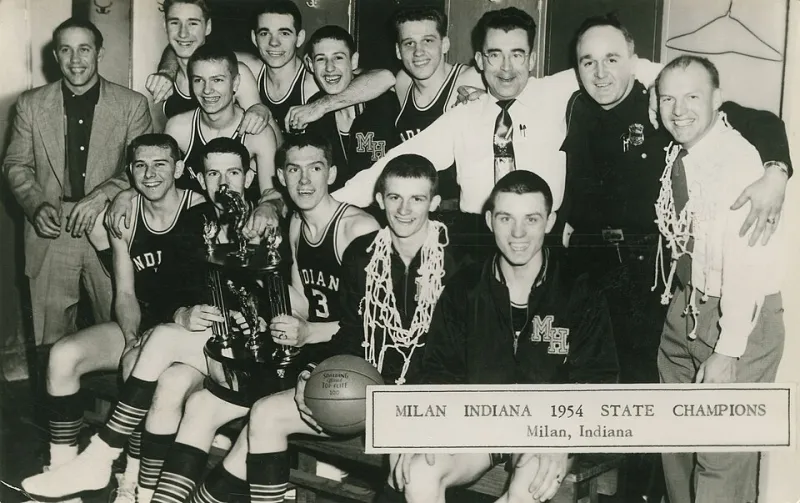
Photo: Steve Shook from Moscow, Idaho, USA, CC BY 2.0, via Wikimedia Commons
Consider the Milwaukee Bucks fan who has renewed her season tickets every year since 1994. She has watched draft picks dissolve into mediocrity, watched stars depart for larger markets, watched the franchise rebuild — and rebuild again — with the patient, practiced resignation of someone who has long since stopped measuring her love against the scoreboard. She does not attend games expecting transformation. She attends because attendance itself has become the point.
This is not resignation. This is theology.
Across the American sports landscape, a quiet and largely uncelebrated spiritual practice takes place every autumn and spring in cities that the championship conversation tends to overlook. In Memphis and Oklahoma City, in Sacramento and New Orleans, in the long-suffering precincts of Cleveland before its singular 2016 deliverance, fans have developed a relationship with their teams that transcends the transactional logic that governs most consumer behavior. They do not receive what they pay for, at least not in the conventional sense. And yet they return. Season after season. Generation after generation.
To dismiss this as mere habit or geographical accident is to miss what is genuinely extraordinary about it.
Faith Without Evidence
Every major religious tradition draws a distinction between two categories of belief. The first is belief supported by evidence — the kind that flourishes when prayers appear to be answered and outcomes confirm the devotee's trust. The second, considered by most traditions to be the more mature and more difficult form, is belief that persists in the absence of confirming evidence. This is the faith of Job, stripped of everything, refusing to abandon his covenant. This is the faith of the desert fathers, praying into silence for decades without response.
The small-market sports fan has, often without naming it as such, been practicing the second kind.
The San Antonio Spurs, for all their dynastic success in the Tim Duncan era, represent a fascinating case study in the cultivation of a fan base built on something deeper than championship expectation. Before Duncan arrived in 1997, San Antonio was a franchise defined by near-misses and organizational chaos. The fans who built their loyalty during those lean years were not waiting for a dynasty. They were simply showing up. When the dynasty finally came, those fans possessed a quality of appreciation that newer, bandwagon-adjacent followers could not easily replicate — because their love had been forged in the absence of reward.
Grace, most traditions agree, is not something you earn. But the capacity to receive it is often developed through long practice in its apparent absence.
Cleveland and the Weight of Waiting
No city in American sports has carried the theology of suffering more visibly than Cleveland. Before the Cavaliers' 2016 championship — a title that arrived with the dramatic weight of a genuinely redemptive narrative — Cleveland had endured a sports drought so prolonged and so cruel that it acquired its own mythology. "The Drive." "The Fumble." "The Shot." Each moment a fresh wound in the civic body.
And yet the fans did not leave. They developed, over those decades of disappointment, a philosophical sophistication about sports fandom that wealthier, more successful markets simply do not possess. Cleveland fans understood, viscerally and without sentimentality, that rooting for a team is not a transaction. It is a covenant — an agreement to remain in relationship regardless of what the relationship returns.
When LeBron James finally delivered that championship, the eruption of joy in the city was not merely the pleasure of winning. It was the release of something that had been held in trust for fifty-two years. The waiting itself had become sacred. The victory was almost secondary to the meaning that had accumulated in its long approach.
This is what theologians call eschatological hope: the capacity to organize one's life around a fulfillment that has not yet arrived and may not arrive in one's lifetime. Cleveland sports fans, without any formal instruction in the concept, had been practicing it for generations.
The Purity of Unconditional Support
There is a critique of small-market loyalty that deserves honest engagement: that unconditional support, taken too far, enables mediocrity. If fans attend regardless of product quality, the argument goes, ownership has no incentive to invest in improvement. Loyalty becomes complicity.
This critique contains genuine truth. It is, in fact, a problem that several small-market franchises have exploited — collecting revenue from devoted fan bases while refusing to spend competitively. The Sacramento Kings spent much of the 2010s as a masterclass in this kind of institutional bad faith.
But the critique misunderstands what the best version of small-market fandom actually looks like. The most philosophically mature fans in Memphis or Oklahoma City are not passive. They are vocal, demanding, and clear-eyed about their franchise's failures. What they refuse to do is allow those failures to sever the relationship. They distinguish, in other words, between holding an institution accountable and abandoning it — a distinction that most serious spiritual traditions also insist upon.
Love that persists through disappointment is not the same as love that excuses wrongdoing. The parent who refuses to abandon a struggling child is not endorsing the struggle. The parishioner who remains in a flawed congregation is not endorsing its flaws. The small-market fan who returns to a losing team is not endorsing the losing. They are asserting something more fundamental: that the relationship has a value independent of its outcomes.
What the Champions Cannot Know
There is something that fans of perennially successful franchises — your Los Angeles Lakers loyalists, your New England Patriots devotees — cannot fully access, no matter how genuine their passion. They have not been tested in the same way. Their love has been regularly rewarded, which means it has never been forced to discover what it is made of at its core.
This is not a condemnation. It is simply an observation about the different spiritual territories that different fan experiences occupy.
The fan who has loved a team through thirty years of futility and returned to the arena anyway has answered a question that the championship fan has never had to face: What am I actually here for? Having been stripped of the easy answer — winning, glory, reflected success — they have been compelled to find a deeper one.
Most of them find it in community. In the shared language of a city that knows its team, knows its history, knows its heartbreaks. In the rituals of game day that persist regardless of the standings. In the relationship between the franchise and the place — a relationship that, at its best, is genuinely covenantal: mutual, particular, and not easily transferred.
The Sacred Practice of Showing Up
Holy Ballism has always held that sports, at their most meaningful, are not entertainment in the passive sense. They are participatory rites — occasions for communities to enact their values, test their commitments, and discover what they are willing to endure together.
By that measure, the small-market fan base is not a consolation prize for cities that cannot attract free agents. It is, in many respects, the fullest expression of what sports fandom was always meant to be: a practice of loyalty that deepens through adversity, a covenant that gains meaning precisely because it costs something to maintain.
The Milwaukee fan renewing her tickets for the thirtieth time is not deluded. She is not simply a creature of habit. She has found, in the stubborn practice of showing up, something that the highlight reel and the championship parade cannot manufacture: a faith that has been tested, and has held.