The Silence Between Bounces: meditations on the Arena Before the Congregation Arrives
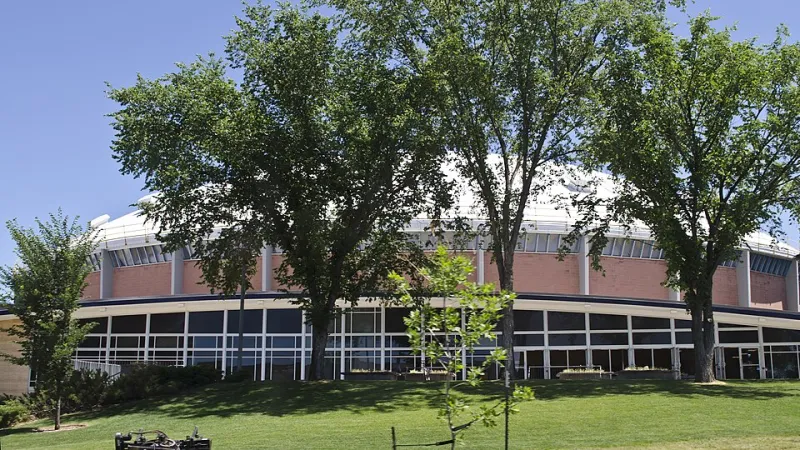
Photo: Tim Evanson, CC BY-SA 2.0, via Wikimedia Commons
The Hour Before the Gates
There is a moment, somewhere around nine on a weekday morning, when an NBA arena belongs to no one. The lights burn at half power. A maintenance worker's broom whispers across a concourse that will, twelve hours later, hold seventeen thousand voices. On the floor below, a single ball strikes hardwood in an unbroken rhythm — dribble, catch, dribble — the only heartbeat in a building built to hold ten thousand of them.
During the pandemic seasons, when American sport was forced to carry on without its congregations, we all caught a glimpse of this hour stretched into permanence. Games were played. Baskets were scored. Championships were raised under confetti cannons aimed at empty seats. And something about it felt, to even the casual observer, faintly wrong — like a wedding with no guests, or a hymn sung into a vacant nave.
We told ourselves it was the noise we missed. It was not.
What the Crowd Actually Does
It is tempting to think of fans as spectators, as consumers of a product. But the fanless season revealed a harder truth: the crowd is not watching the game. The crowd is completing it.
Consider what a crowd does at a level deeper than cheering. It breathes together. It holds its breath at the free throw line — twenty thousand people agreeing, wordlessly, to suspend themselves in the same instant. It rises as one when a dunk lands, a motion so synchronized it resembles nothing so much as a congregation standing for the reading of the Gospel.
Sports sociologists have long noted that fans at a game are not really watching each other or even the athletes; they are participating in what the philosopher Émile Durkheim called collective effervescence — the charged, shared emotional state that traditional societies cultivated through ritual. The pandemic stripped this away and left only the mechanics: the shooting, the scoring, the standings. What remained was a body without a soul, a liturgy without a congregation.
The Discipline of Emptiness
And yet — and here is the harder teaching — there was something in the emptiness worth attending to.
Monastic traditions across centuries have understood that silence is not the absence of meaning but its crucible. The Trappist does not take a vow of silence because sound is evil, but because in the quiet, one finally hears what the noise had been drowning out. The empty arena, likewise, forced us to hear the game itself: the squeak of shoes as a language, the coach's instructions as plain speech, the ball's rotation through the net as a sound we had never actually heard over the roar.
For the athletes, this was a spiritual ordeal. Many spoke afterward of feeling unmoored, of performing without witness. A free throw in an empty gym is the same act as one in Game 7 — and yet it is not the same act at all, because meaning in sport, like meaning in worship, is co-created. The athlete consecrates the effort; the crowd receives it. Remove one party and the sacrament stalls.
Some players, though, discovered something else in the void. Without the crowd's applause to orient toward, they were forced to locate the internal reasons they played at all. Several described the bubble seasons as the most honest basketball of their careers — a forced retreat into the question every athlete eventually must face: Who am I when no one is watching?
This is, of course, one of the oldest questions in the spiritual canon. The desert fathers asked it. The monastics ask it daily. The fanless season asked it of an entire industry.
Gathering as an Act of Faith
So what were we gathering for, before the silence came? Not, it turns out, merely for the game. The game was always available on a screen, in sharper detail than any seat provides. We gathered to be together — to practice, in a country increasingly fragmented and isolated, the vanishing discipline of shared attention.
Think of what a stadium requires of us: we arrive early, we queue, we sit shoulder to shoulder with strangers, we wear the colors of a tribe we chose or inherited, we stand and sit and stand again in unison. In an age when congregational attendance across American religious life has steadily declined, the arena has quietly become one of the last places where a stranger will high-five you over a shared moment of awe.
The empty season taught us that this gathering was never optional garnish. It was the meal.
Returning to the Full House
The crowds have come back, louder and hungrier than ever, and the empty hours have receded into their usual obscurity — the province of groundskeepers and ushers and the occasional writer wandering a concourse at dawn. But those of us who watched sport survive its own wilderness carry a different understanding now.
The arena before the gates open is not a dead thing. It is a held breath. Every empty seat is a place where someone will laugh, grieve, argue with their father, or watch their child see something enormous for the first time. The silence is not the opposite of the roar. It is the roar, waiting.
And perhaps that is the quiet discipline the fanless season left us: to never again mistake the crowd for the noise. The crowd is the covenant. The noise is only its voice.