The Shape of Eternity: Why the Sphere Holds Dominion Over American Sport
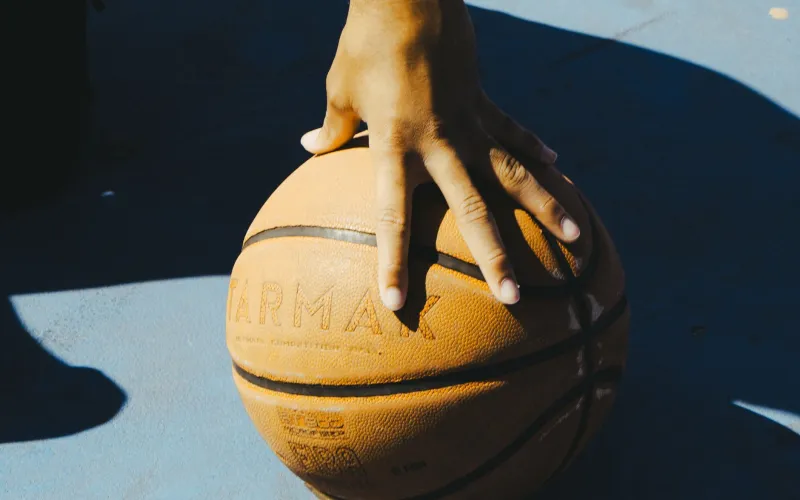
Consider the objects of our devotion. The football is a prolate spheroid, an irregular thing that wobbles and skips unpredictably. The puck is a flat disc, condemned to slide along two dimensions. The hockey stick, the bat, the racket—these are angular instruments, all edges and intention. But the basketball, the baseball, the soccer ball, the golf ball: these are spheres, and spheres are different. They are not merely equipment. They are, if we are honest with ourselves, the closest thing modern American sport has to a sacred object.
The Orb in the King's Hand
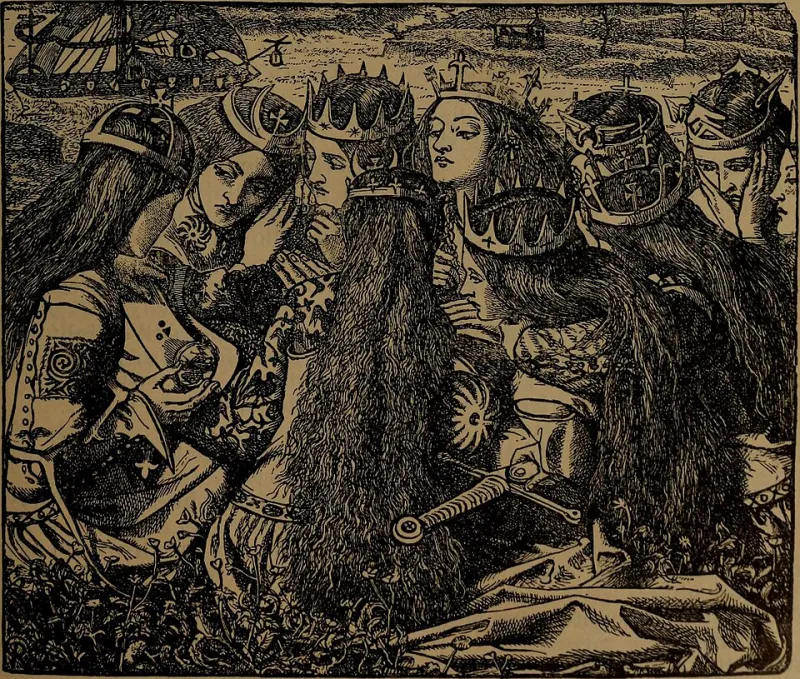
The symbolism is ancient and it is not subtle. For over a millennium, Western monarchs have been inaugurated with the globus cruciger—"the orb and cross"—a golden sphere surmounted by a cross, representing Christ's dominion over the world. The Holy Roman Emperors held it. English sovereigns still grip one at coronations. The message was always the same: to hold the sphere is to hold the world, and to hold the world is to accept a burden of order over chaos.
Eastern traditions arrived at a similar grammar by different roads. The Buddhist prayer wheel spins its mantras around a cylinder, but the mandala—the diagram of the perfected universe—is radial, circular, complete in itself with no beginning and no end. The Chinese cosmologists imagined heaven as round and earth as square, and built coins to match: a circular currency pierced by a square hole, heaven threaded through earth. In nearly every tradition we know of, roundness belongs to eternity while angularity belongs to the temporal, the practical, the broken.
What the Roundness Does to the Game
This is where ball sports earn their theological weight. An angular game is a game of collisions—blocking, checking, tackling—where force meets force and something gives. A spherical game is a game of relationships. The basketball does not simply travel from point A to point B; it speaks to every surface it touches, exchanging spin for trajectory, angle for angle. A well-thrown outlet pass is a conversation. A baseball hit on the sweet spot produces a sound so pure that broadcasters have called it sacred for a century, and they are not wrong to do so.
The sphere also refuses favorites in a particular way. A football can take a lucky bounce off a deflected pass and land in the arms of a receiver who did nothing to deserve it. But the round ball on the rim of the hoop is the great democratic equalizer of American sport—it can roll in for the humblest player or rattle out for the greatest. Watch a March Madness buzzer-beater and you will see theology in real time: grace, freely given or freely withheld, with no appeal and no explanation. Fans at Allen Fieldhouse in Lawrence or Cameron Indoor Stadium in Durham understand, at some level, that they are watching something closer to verdict than outcome.
The Circle as Community
There is a further point, and it concerns us as spectators. Ball sports organize human beings into circles. The tipoff circle. The pitcher's mound. The center circle in soccer, where every match begins with a ball resting at the still point of a turning world. Fans themselves gather in arenas that are, architecturally, bowls—amphitheaters of a design the ancients would recognize, arranged in rings around a common center of attention.
We do not gather in lines to watch a basketball game. We gather in circles, and circles have always meant communion. The round table, the campfire ring, the huddle—when Americans form a circle, we are doing something older than language. The sphere at the center of the game simply gives that instinct a focus, a still point around which forty thousand strangers in Phoenix or Boston can briefly become one body.
The Limits of the Metaphor
A word of caution, however, from the neutral corner. The sphere is not holy in itself; it is a sign, and signs can be overread. The globus cruciger was also held by men who abused their power. The prayer wheel spins whether the hand that turns it is pure or corrupt. A round ball has rolled through fixed games, segregated leagues, and labor disputes without once complaining. Symbolism illuminates; it does not absolve.
But this is precisely the point worth making. The sphere does not promise perfection. It offers the image of perfection—the unbroken curve, the fair bounce, the complete game—and then asks flawed people to pursue it anyway. That gap between the ideal shape and the imperfect hands that chase it is not a flaw in the metaphor. It is the metaphor. It is the same gap every tradition of spiritual discipline has asked its practitioners to dwell within.
The Still Point of the Season
So yes, we concede the charge that this publication takes its round objects too seriously. But watch the tip of Game 7. Watch the ball ascend between two exhausted men, hang for an instant at the apex of its arc, and come down to decide a season. In that suspended moment there is neither home team nor away team, neither favorite nor underdog—only the sphere, complete in itself, falling toward a future no one has earned.
The kings were wrong about one thing. The world does not belong to whoever holds the orb. The orb belongs to no one. That is the whole sermon, and it is why we keep watching.