The Laying On of Caps: Draft Night as America's Truest Confirmation
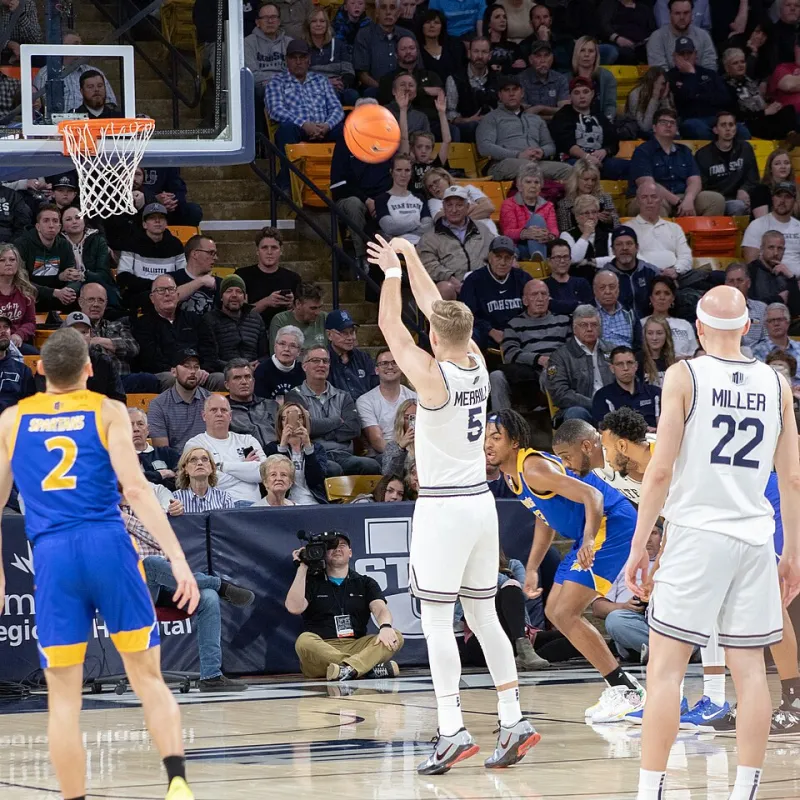
Photo: GrantBess, CC BY-SA 4.0, via Wikimedia Commons
There is a moment, replayed hundreds of times each summer, that deserves more theological scrutiny than it receives. A young man — often barely a legal adult — rises from his seat in the green room, buttons his jacket, and walks toward the stage. The commissioner extends a hand. A cap is placed upon his head, bearing the insignia of a franchise he did not choose so much as was chosen by. The audience erupts. Somewhere in a gymnasium in his hometown, people weep.
We call this the draft. We might more honestly call it a confirmation.
A Rite With All the Trappings
Consider what the ceremony actually contains. A gathered congregation, millions strong, watching at a liturgically fixed hour. An authority figure vested in the costume of his office. The physical gesture — the handshake, the cap, the embrace — that functions precisely as the laying on of hands does in older traditions. A public profession before witnesses. And a transformation of status so complete that the initiate's life is never the same afterward: new city, new income, new name on a jersey.
Anthropologists have long noted that societies mark the passage from youth into adult obligation through ritual. Most modern American institutions have let these rites atrophy. But professional sport, ever the diligent custodian of ancient forms, preserved one. The draft is where our culture still performs, with full solemnity, the ceremonial welcome of the young into the order of the grown.
The Covenant Nobody Reads Aloud
What is less examined is what the rite asks in return. Confirmation in the religious sense is not merely a blessing; it is an assumption of responsibility. The confirmed accepts obligations the community considers binding. So too with the draftee. The cap on his head is a visible sign of an invisible contract: he agrees to carry the hopes of a city, to discipline his body according to an institution's demands, to become, overnight, a public figure whose failures will be chronicled with relish.
No one reads these terms aloud on the stage. The rookie speaks mostly in gratitude — thanking his mother, his coach, the organization. But the gratitude itself is part of the liturgy, the appropriate first prayer of the newly received. What the covenant actually demands — durability, obedience, performance under pain, silence about the machinery of the league — is learned later, in the quiet after the cameras leave.
Chosen, and Therefore Bound
There is a particular spiritual weight in being selected. The draftee did not apply in the ordinary sense; he was called. Teams speak of "wanting" players, of players "fitting the culture," and the language of vocation creeps in unbidden. For the young man from a neighborhood where few doors open, the experience of being chosen by a powerful institution can feel nothing short of providential.
But chosenness is a double-edged doctrine. To be selected is to be told you were measured, evaluated, judged worthy — and that the judgment can be revoked. Second-round picks know this acutely. So do the undrafted, who wait at the edge of the sanctuary hoping to be let in through a side door. The draft's shadow sacrament is the call that never comes, the name never spoken, the cap never placed. Every draft class includes young men who prepared for a vocation and were passed over — a quiet tragedy our coverage rarely lingers on.
What the Rite Reveals About Us
It is worth sitting with the discomfort: the most consequential coming-of-age ceremony in American public life now funnels enormous wealth to a handful of teenagers while millions of viewers treat the evening as entertainment. We have not abandoned ritual; we have relocated it. The questions confirmation once asked — who are you becoming, and whom will you serve? — are now answered by shoe deals and jersey sales before the initiate has finished growing into his own frame.
This is not an argument against the draft. The rite, honestly observed, is neither corrupt nor holy but human: an old pattern wearing new vestments. What matters is whether we see it clearly. When a city embraces its first-round pick, it is performing an act of collective hope — betting its summers on a stranger's growth. That hope is genuine, even sacred in its way. The failure is only in pretending the ceremony is merely a transaction.
The cap comes off. The covenant remains. And somewhere, an eighteen-year-old begins learning what his community, in its excitement, forgot to tell him he had promised.